







By using our website, you agree to the use of cookies as described in our Cookie Policy
Do Pets in Manassas Need X Rays for Injuries or Illness?
Most pet owners think X-rays are just about broken bones. Snap, click, done. But vets see more than that — and if you're not paying attention, you're missing half the picture. X-rays don't just reveal fractures. They show what's hiding beneath the fur, inside the chest, and deep in the abdomen. Especially when symptoms don't add up or when waiting could mean worse trouble down the line.
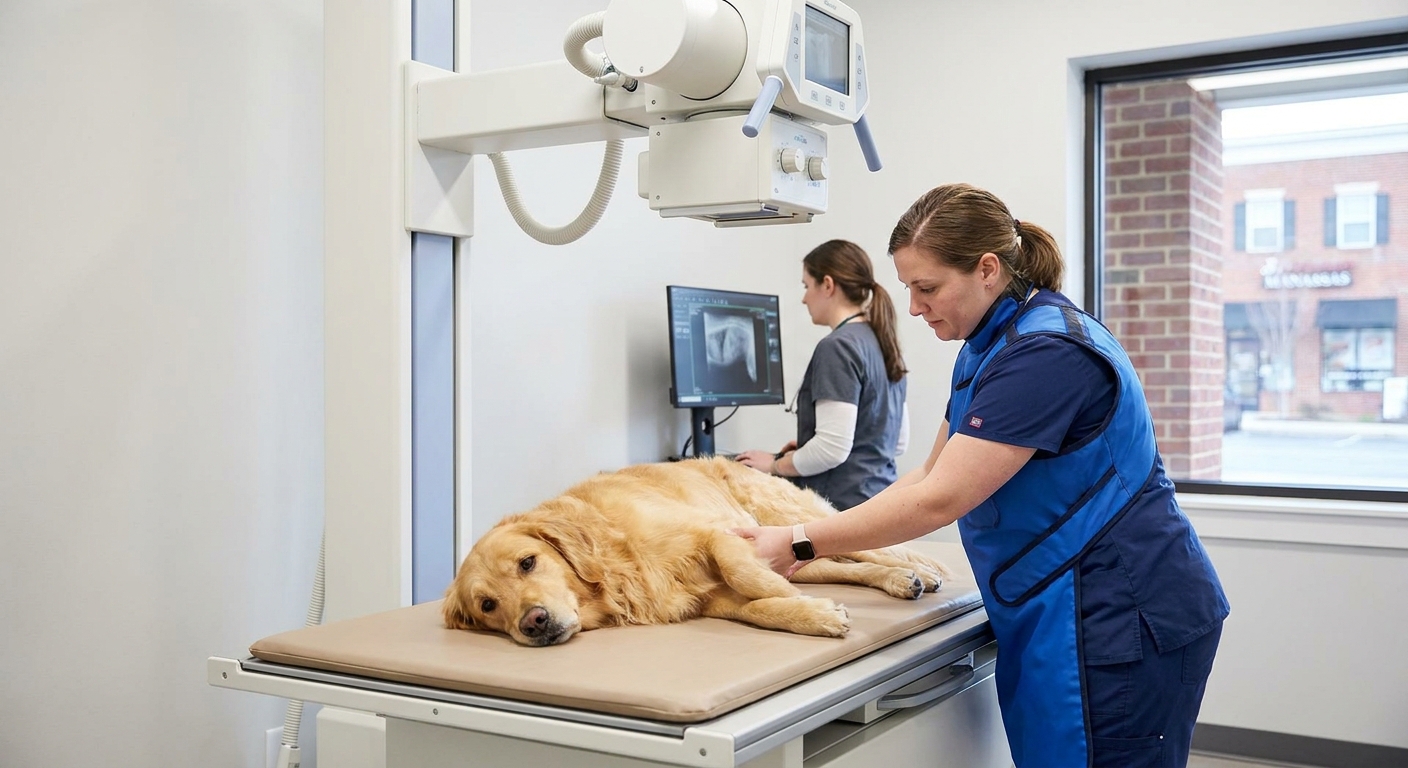
So here's the reality. If your dog's limping or your cat's breathing funny, that's not always something you can diagnose with your eyes. Every symptom deserves a closer look. Every diagnosis needs backup. And every treatment decision should be grounded in what's actually happening inside — not just what looks off on the surface.
When Imaging Matters and When It Doesn't
Nine times out of ten, vets don't jump straight to X-rays. They start with exams, history, and observation — that's standard protocol. The radiograph comes into play when the physical exam hits a wall or when the stakes are too high to guess.
But if your pet's symptoms scream internal damage? Different ballgame. A fall from height, a collision with a vehicle, sudden paralysis — these aren't wait-and-see moments. We've watched this unfold in real time with emergency cases. Plenty of owners thought their pet was fine after a fall — until the radiology services showed rib fractures or fluid in the lungs. And when internal bleeding gets missed, the outcome shifts fast.
The Injuries That Show Up on Film
You can't always see what's broken from the outside — that's where imaging earns its keep. Vets rely on radiographs to confirm what they suspect and rule out what they don't.
Here's where X-rays deliver the most clarity:
- Fractures and dislocations after trauma or falls
- Hip dysplasia or degenerative joint disease in older pets
- Foreign objects lodged in the stomach or intestines
- Bladder stones or urinary blockages causing strain
- Tumors pressing on bones or growing in soft tissue
- Spinal injuries affecting mobility or nerve function
Respiratory Trouble Needs a Chest View
Coughing that won't quit? Labored breathing? Collapse after exercise? Those aren't symptoms to brush off. Chest X-rays let us see the heart, lungs, and surrounding structures in detail.
We're looking for pneumonia, fluid buildup, enlarged hearts, or masses that shouldn't be there. Sometimes it's congestive heart failure. Sometimes it's a tumor. And sometimes it's something treatable if we catch it early. But without imaging, we're guessing — and that's not how we practice medicine.
When the Belly Tells a Story
Abdominal pain, vomiting, bloating — these can point to dozens of issues. X-rays help narrow the list fast. We've pulled socks, toys, corncobs, and rocks out of dogs who swallowed first and regretted it later. But the radiograph has to show the obstruction before we can plan surgical services.
Organ enlargement also shows up on film. A swollen liver or spleen might not be obvious during palpation, but it's clear as day on an image. Same goes for fluid accumulation or gas patterns that signal intestinal blockage. Timing matters here. Wait too long, and a fixable problem becomes a critical one.
Radiation Exposure Is Minimal and Controlled
Worried about safety? We get it. But the radiation dose from a veterinary X-ray is low — far lower than what humans receive in most medical imaging. The process is quick, targeted, and monitored.
Sedation sometimes comes into play, especially if your pet's in pain or too anxious to hold still. We don't sedate for fun. We do it so the images come out clear and your pet doesn't suffer through the positioning. The risk is minimal when handled by trained professionals, and the diagnostic payoff is usually worth it.
What Happens During the Appointment
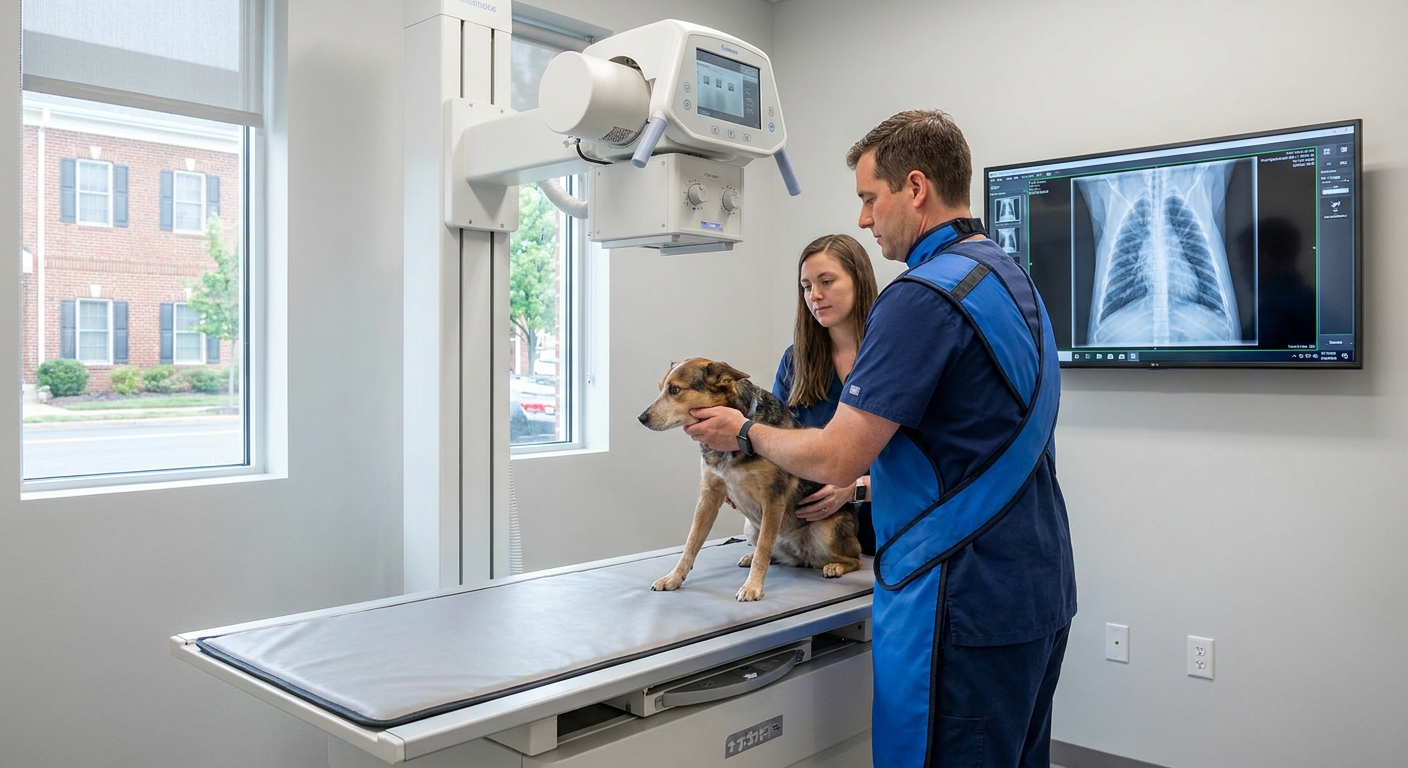
The actual X-ray takes minutes. Your pet gets positioned on a table, the machine clicks, and we capture the angles we need. No surgery. No needles in most cases. Just radiation passing through tissue to create a picture.
Afterward, the vet reviews the images — sometimes on the spot, sometimes with a radiologist for trickier cases. Then you get the rundown. What we found, what it means, and what comes next. If it's a clean bill of health, great. If it's a fracture or blockage, we map out treatment right there.
Documentation Backs Every Decision
Want a second opinion? Planning surgery? Filing an insurance claim? You'll need those X-ray images. Digital files make it easy to share records between clinics or specialists without losing quality.
Here's what solid imaging documentation should include:
- High-resolution images from multiple angles
- Written radiologist interpretation when needed
- Date and time stamps for tracking progression
- Comparison films if your pet's been imaged before
Where Pet Owners Get Tripped Up
Assuming symptoms will resolve on their own is the fastest way to let a small problem become a big one. Limping for three days? That's not just a bruise. Vomiting after eating? Could be more than an upset stomach.
Delaying imaging because of cost concerns happens more than we'd like to admit. But catching a blockage early costs less than emergency surgery at midnight. Spotting a tumor in its early stage opens more treatment options. We're not pushing X-rays for profit. We're recommending them because they change outcomes.
The Illnesses That Don't Wait
Some conditions move fast. Bloat in large-breed dogs can kill within hours if the stomach twists. Pneumonia can escalate to respiratory failure. A small bladder stone can turn into a full urinary blockage overnight.
Here's what demands urgent imaging:
- Sudden inability to walk or stand
- Severe abdominal distension or pain
- Difficulty breathing or blue-tinged gums
- Suspected poisoning or toxin ingestion
- Seizures with no known cause
Not Every Symptom Needs Film
We're not X-raying every cough or sneeze. Mild ear infections, minor skin issues, routine vaccinations — these don't require imaging. Vets use clinical judgment to separate what needs a picture from what doesn't.
But if your pet's symptoms persist, worsen, or don't match the initial diagnosis? That's when we dig deeper. A recheck exam might reveal something new. Or the X-ray finally shows what we couldn't feel or hear.
Advanced Imaging Picks Up Where X-Rays Leave Off
Sometimes radiographs aren't enough. Soft tissue injuries, ligament tears, or certain organ diseases show up better on ultrasound or CT scans. We'll recommend those when X-rays hit their limit.
But for bone, lung, and most abdominal issues? X-rays are still the gold standard. Fast, affordable, and effective. They're the workhorse of veterinary diagnostics, and they've saved more pets than we can count.
When to Bring in a Specialist
If your regular vet spots something unusual on an X-ray — a complex fracture, a suspicious mass, or unclear findings — they might refer you to a specialist. Radiologists, orthopedic surgeons, and internal medicine vets bring extra training to the table.
We help you navigate that process by:
- Coordinating referrals and transferring records smoothly
- Explaining what the specialist will look for and why
- Following up after specialist visits to continue care
- Keeping communication open between all parties
Diagnostic Clarity Drives Better Outcomes
Taking the guesswork out of veterinary care isn't optional. It's how we practice responsibly. X-rays give us the information we need to treat accurately, plan surgery confidently, and monitor progress objectively. There's no substitute for seeing what's actually happening inside your pet's body.
At Manassas VA vet clinic, we help pet owners move past uncertainty. We use laboratory and imaging strategically — with speed, precision, and an understanding of what it means for treatment, not just diagnosis. When your pet needs answers, we deliver them with clarity and care through our comprehensive veterinary services.
Let's Get Your Pet the Answers They Deserve
We know how much your pet means to you, and when something feels off, you want clear answers fast. Our team is here to guide you through every step, from the first exam to advanced imaging and beyond. If you’re worried about your pet’s health or just want peace of mind, give us a call at 571-208-1011. When you’re ready to take the next step, contact us and let’s work together to keep your pet healthy and happy.
‹ Back
Recent Posts
-
Can Stress Make Your Cat in Manassas Stop Eating?
September 23, 2026
-
What it Means if Your Dog is Scratching More Than Normal
September 9, 2026
-
Signs Your Pet in Manassas Could Have an Ear Infection
August 26, 2026
-
Does Your Pet Need a Microchip Update in Manassas?
August 12, 2026
-
Can Indoor Cats Skip Annual Vet Visits in Manassas?
July 29, 2026