







By using our website, you agree to the use of cookies as described in our Cookie Policy
When Your Pet in Manassas Needs Urgent Care Right Away
Most pet owners think emergencies happen to someone else. Until they don't. Your dog collapses in the yard. Your cat stops eating and won't move. Suddenly, you're scrambling for answers — and the clock is ticking. The difference between a full recovery and something worse often comes down to how fast you recognize the problem and what you do next.

We're not here to scare you. We're here to make sure you're ready. Because when your pet's health takes a turn, hesitation costs more than money. It costs time you can't get back. And in Manassas, where quality urgent veterinary care is available, there's no reason to wait until symptoms spiral out of control.
The Red Flags You Can't Ignore
Animals hide pain. It's instinct. So by the time they show distress, the situation is often serious. You won't always get a clear signal, but certain symptoms demand immediate action — no second-guessing, no "let's wait and see."
Here's what warrants a trip to urgent care without delay:
- Labored breathing or gasping for air
- Bleeding that won't stop after a few minutes of pressure
- Seizures, convulsions, or sudden loss of consciousness
- Inability to stand or walk without collapsing
- Repeated vomiting or diarrhea, especially with blood present
Then there are the quieter emergencies — the ones that don't scream but still kill. A bloated abdomen that feels tight. Straining to urinate with nothing coming out. Sudden blindness or a swollen eye. Suspected poisoning from household chemicals, chocolate, or toxic plants. These aren't "wait until morning" situations. They're "get in the car now" situations.
What Happens When You Freeze
Panic is normal. But it's also dangerous. The moment you realize something's wrong, your brain wants to hope it'll pass. Maybe they just ate something weird. Maybe they're tired. Maybe it's nothing.
That hesitation? It's the gap where conditions worsen. Internal bleeding spreads. Toxins circulate. Organs start shutting down. We've seen too many cases where an extra hour of waiting turned a treatable emergency into a tragedy.
Your job isn't to diagnose. It's to act. Call the vet. Describe what you're seeing. Let them tell you whether to come in or monitor at home. But make that call — don't sit on it.
How to Move Fast Without Making It Worse
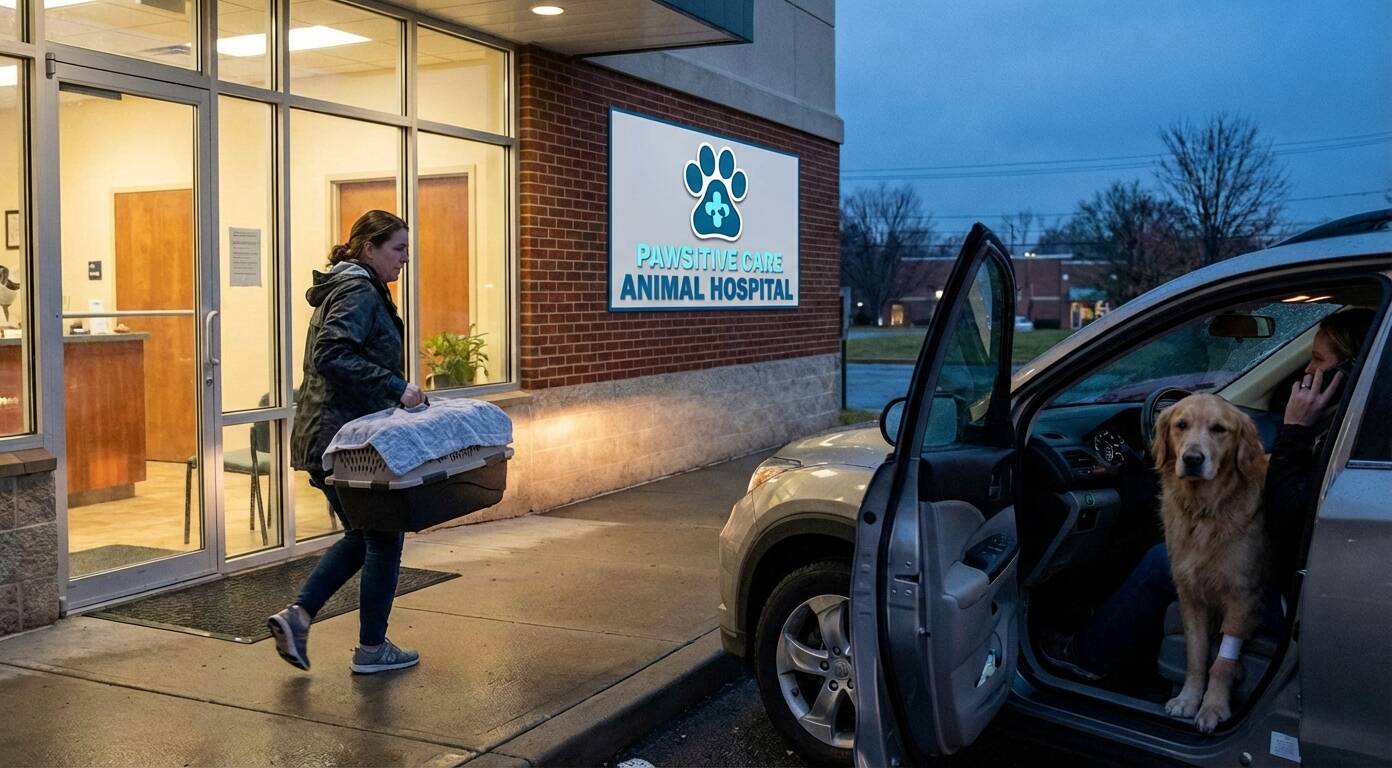
Once you've decided your pet needs urgent care, transport matters. A hurt or terrified animal can bite, scratch, or thrash — even if they've never shown aggression before. Pain changes behavior.
Here's how to get them to the clinic safely:
- Use a carrier for small pets or a sturdy blanket as a makeshift stretcher for larger ones
- Keep their head supported and avoid putting pressure on injured areas
- Stay calm and speak in a low, steady voice to reduce their stress
- Avoid letting them move around freely in the car where they could fall or worsen an injury
- Have someone else drive if possible so you can monitor your pet
Bring any medications they're currently taking, plus details about what happened — when symptoms started, what they might have eaten, whether they were exposed to anything unusual. The vet team will ask, and the more you can tell them upfront, the faster they can treat.
Where to Go When Every Minute Counts
Manassas has solid options for emergency veterinary care, but not all clinics operate on the same schedule. Some offer after-hours service. Others close at six and refer you elsewhere. Knowing where to go before you need it saves precious time when crisis hits.
Start by asking your regular vet which emergency facility they recommend. Most have a relationship with a local urgent care center and can even send over your pet's medical records if needed. If you're new to the area or don't have a vet yet, search for 24-hour animal hospitals nearby and save the address in your phone.
Check reviews, but focus on the ones that mention emergency response and quality of care under pressure. A clinic that's great for routine checkups might not be equipped for trauma or critical cases. You want a team that's seen it all and has the tools to handle it.
Building Your Own Safety Net
You can't prevent every emergency, but you can be ready for one. A basic pet first aid kit should live in your home and your car. Stock it with essentials that buy you time while you're en route to the vet.
What belongs in that kit:
- Sterile gauze pads and self-adhesive bandages
- Antiseptic wipes or solution for cleaning wounds
- A digital thermometer designed for pets
- Tweezers for removing splinters or ticks
- A muzzle or soft cloth to prevent biting if your pet is in pain
Beyond supplies, consider taking a pet first aid course. Learning how to perform CPR on a dog or cat, how to stop bleeding, or how to recognize shock can make you the difference between life and death while help is still minutes away.
The Mistakes That Cost Time
We see the same errors over and over. Pet owners who assume their animal is just being dramatic. Owners who Google symptoms for an hour instead of picking up the phone. Owners who try home remedies when the situation is already critical.
Here's what doesn't work:
- Waiting to see if symptoms improve on their own
- Giving human medications without veterinary guidance
- Assuming a young, healthy pet can't have a serious emergency
- Delaying care because of cost concerns without asking about payment options
- Ignoring subtle signs like lethargy or loss of appetite that build into something worse
Emergencies don't always announce themselves with drama. Sometimes they creep in quietly. A pet that's "just not acting right" can be in the early stages of illness, poisoning, or internal injury. Trust your gut. If something feels off, get it checked.
Keeping Your Pet Out of the Danger Zone
Prevention isn't foolproof, but it stacks the odds in your favor. Regular wellness visits and vaccinations catch problems before they explode. Keeping toxic foods, plants, and chemicals out of reach eliminates common poisoning risks. Supervising outdoor time reduces the chance of trauma or encounters with dangerous wildlife.
Stay current on vaccinations and parasite prevention. Know your pet's baseline behavior so you can spot changes early. And if your pet has a chronic condition — diabetes, heart disease, seizures — make sure you understand the warning signs of a flare-up and have an action plan ready.
Speed and Clarity Win Emergencies
When your pet's health crashes, there's no room for guesswork or delay. The faster you recognize the problem and get them to a qualified vet, the better their chances. Manassas has the resources. You just need to know when to call an emergency vet — and how to move without freezing up.
Keep emergency contacts saved. Build that first aid kit. And when something feels wrong, don't talk yourself out of it. Your pet is counting on you to be the one who acts, not the one who waits. That's the difference between a close call and a tragedy. If you need same-day urgent care for your pet in Manassas, contact us immediately to ensure they receive the prompt attention they deserve.
Let’s Be Ready for the Next Emergency—Together
We all want to believe our pets will never need urgent care, but being prepared is the best way to protect them when the unexpected happens. If you ever find yourself facing a pet emergency in Manassas, let’s make sure you have the support and expertise you need. Call us at 571-208-1011 or contact us today so we can help you keep your pet safe and healthy, no matter what comes your way.
‹ Back
Recent Posts
-

What it Means if Your Dog is Scratching More Than Normal
September 9, 2026
-

Signs Your Pet in Manassas Could Have an Ear Infection
August 26, 2026
-
Does Your Pet Need a Microchip Update in Manassas?
August 12, 2026
-
Can Indoor Cats Skip Annual Vet Visits in Manassas?
July 29, 2026
-
Is Your Dog in Manassas Suddenly Acting Aggressive?
July 15, 2026